The EYE 3.0 - object
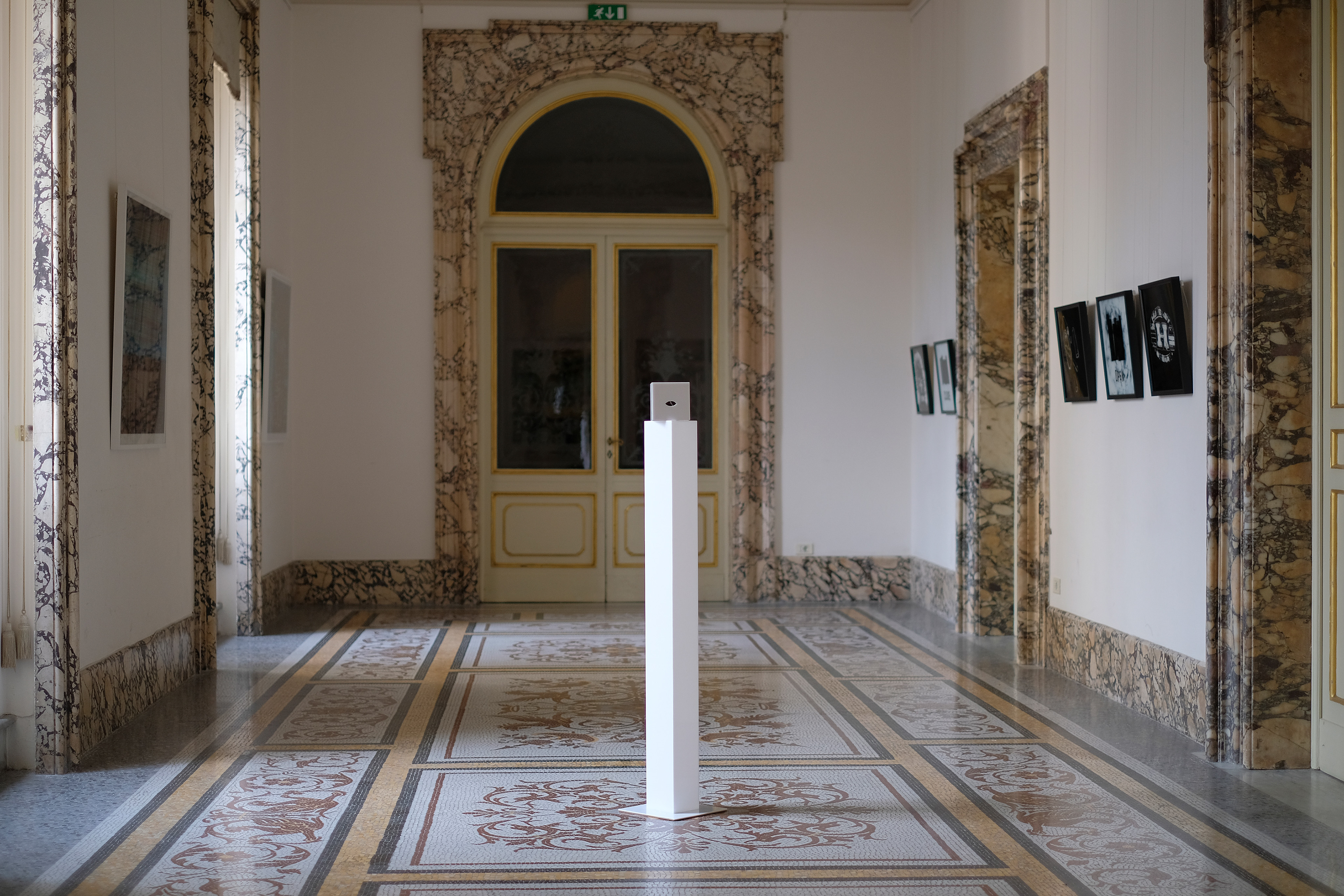
MONDI DI APPARENZE (Worlds of Appearances) exhibition, Hungarian Academy in Rome, Italy, 2019
Exhibited at multiple venues since 2018.
MONDI DI APPARENZE (Worlds of Appearances) exhibition, Hungarian Academy in Rome, Italy, 2019
Exhibited at multiple venues since 2018.
Today, few experiences remain that are not immediately recorded and shared; in most contemporary works, documentability and online representation are already embedded in the artistic concept.
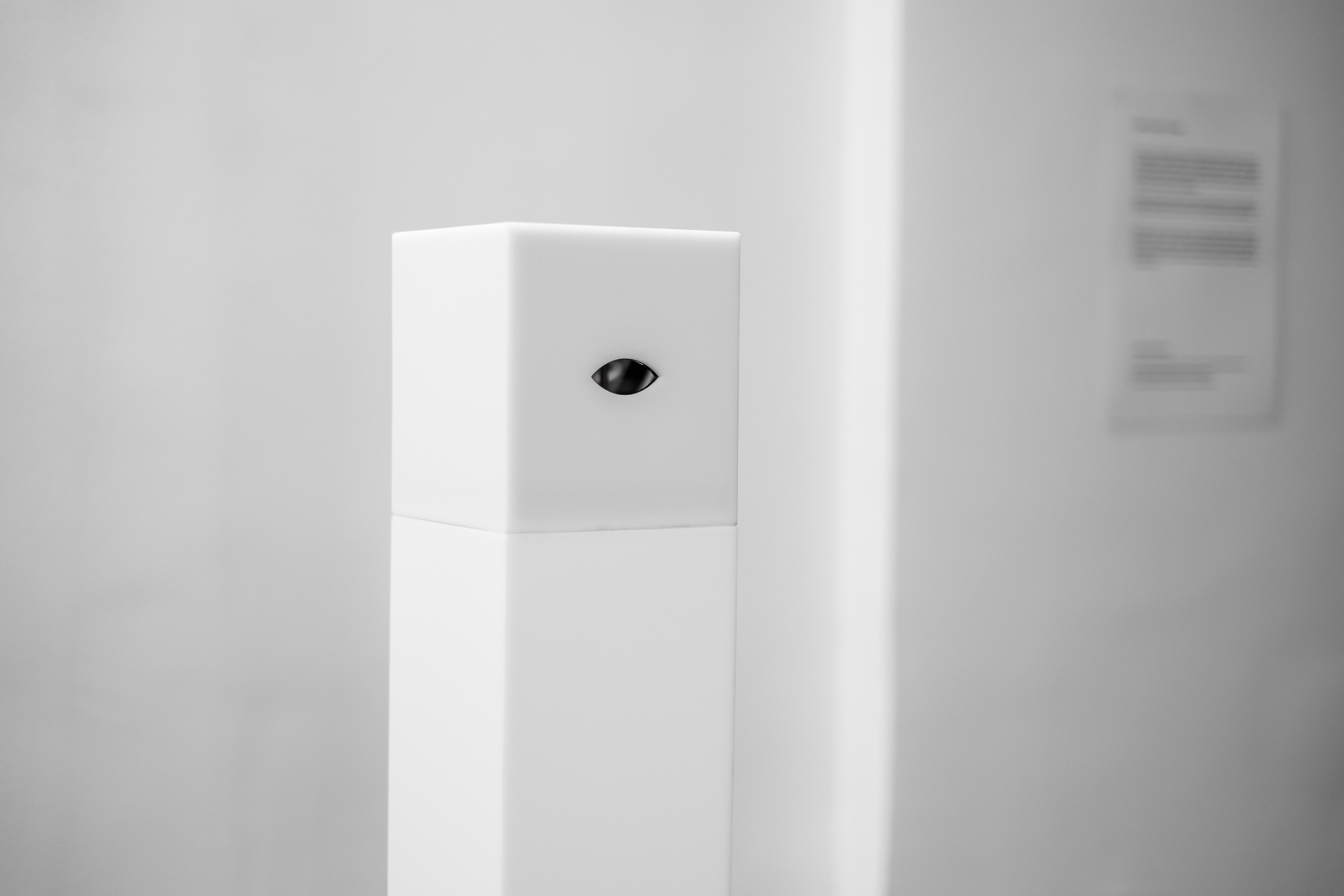
The EYE 3.0, by contrast, offers a radically intimate, single-viewer experience—something increasingly rare today. When looking into the eye-shaped aperture of the white cube, the viewer’s face simultaneously blocks the outside world, making documentation impossible. The work physically restricts shareability, and this functions as a form of resistance: it forces the visitor to stop “consuming” through a screen and instead rely on their own retina and memory.
In this situation, the viewer’s gaze becomes decisive. The spectator is not merely an observer but an essential, integral component of the work itself. The piece embodies a kind of observer’s paradox: the act of looking actively shapes what is experienced. Although the viewer changes, each encounter reveals a different internal constellation.
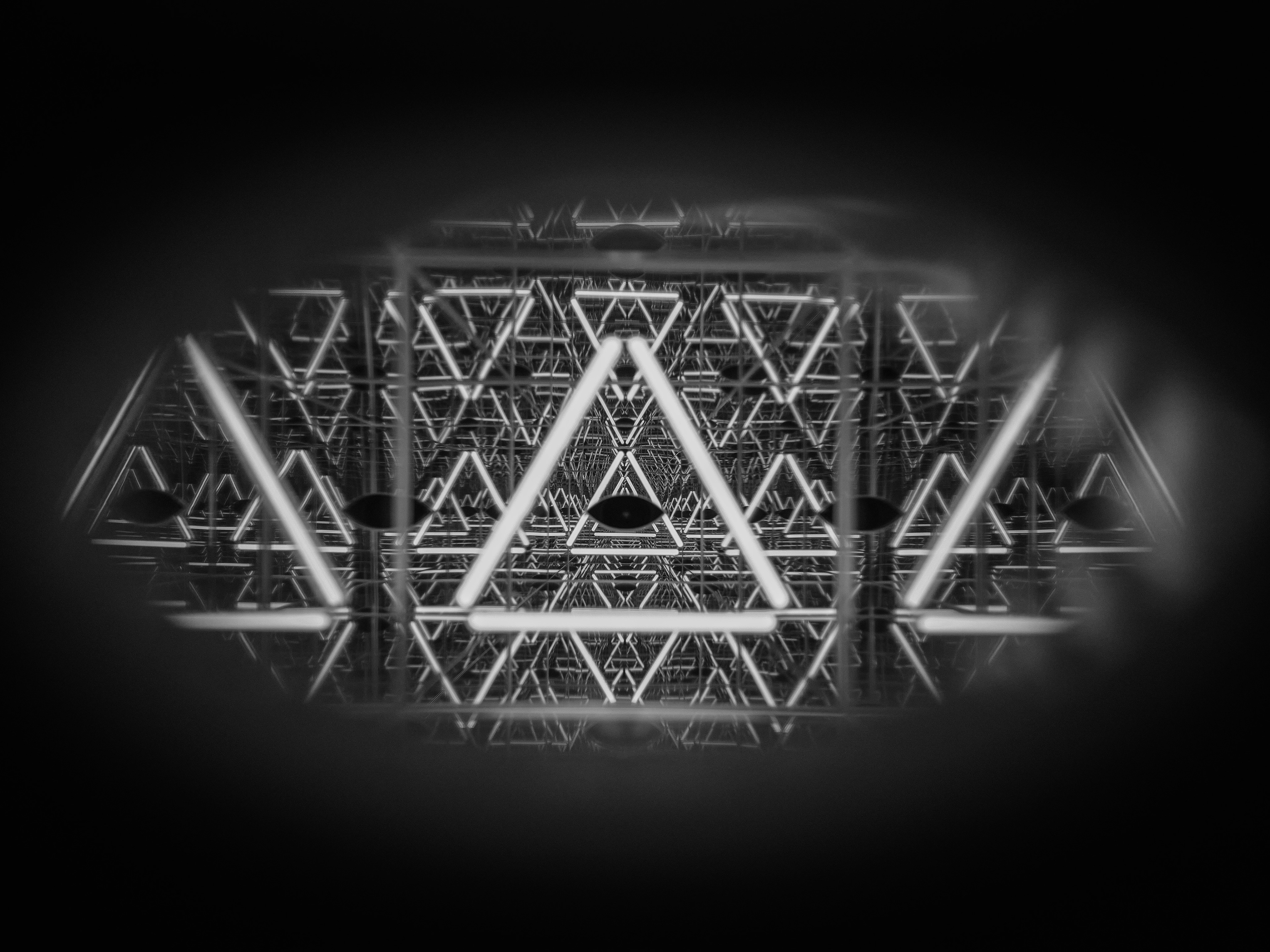
From the outside, the object appears restrained and minimal; inside, it contains an infinite universe. The whole world is not located “out there,” waiting to be photographed, but can only be reached by looking inward through a narrow opening—like peering into a futuristic interior space. This gesture can be understood as a form of modern asceticism: a renunciation of the grand image in order to gain depth.
The object does not produce memories; it occupies time. It exists only as long as someone is looking into it—and belongs solely to the one who is there.
The EYE 3.0 - objekt
MONDI DI APPARENZE (Látszatvilágok) - Római Magyar Akadémia, Róma, Olaszország, 2019
Több helyszínen bemutatva, 2018-tól.
MONDI DI APPARENZE (Látszatvilágok) - Római Magyar Akadémia, Róma, Olaszország, 2019
Több helyszínen bemutatva, 2018-tól.
Napjainkban kevés olyan élmény létezik, amelyet ne rögzítenénk és osztanánk meg azonnal; a legtöbb kortárs alkotásnál már az alkotói koncepció része a dokumentálhatóság és az online reprezentáció lehetősége.
A The EYE 3.0 ezzel szemben radikálisan intim, egyszemélyes élményt kínál – ami ma már ritkán tapasztalható. Amikor a fehér kocka szem alakú nyílásába tekintünk, arcunkkal egyúttal el is takarjuk a külvilágot, lehetetlenné téve a dokumentációt. A mű fizikailag korlátozza a megoszthatóságot, és ez egyfajta lázadás: arra kényszeríti a látogatót, hogy ne egy kijelzőn keresztül „fogyasszon”, hanem a saját retináját és emlékezetét használja.
Ebben a helyzetben a saját tekintet válik meghatározóvá: a néző nem csupán megfigyelő, hanem a mű elengedhetetlen, szerves alkotóeleme. A mű a megfigyelő paradoxonát testesíti meg – ahhoz hasonlóan, amikor maga a megfigyelés aktusa alakítja a tapasztalatot. Bár a befogadó személye cserélődik, mindenki más konstellációt fedez fel.
A kívülről visszafogott, minimalista tárgy egy végtelen belső univerzumot rejt. A mindenség nem „odakint” van, hanem egy szűk nyíláson át, befelé tekintve érhető el – mintha egy futurisztikus tér belsejébe néznénk. Ez egyfajta modern aszkézis: lemondás a nagy képről a mélység érdekében.
A látvány addig létezik, amíg valaki belenéz – és csak azé, aki ott van.