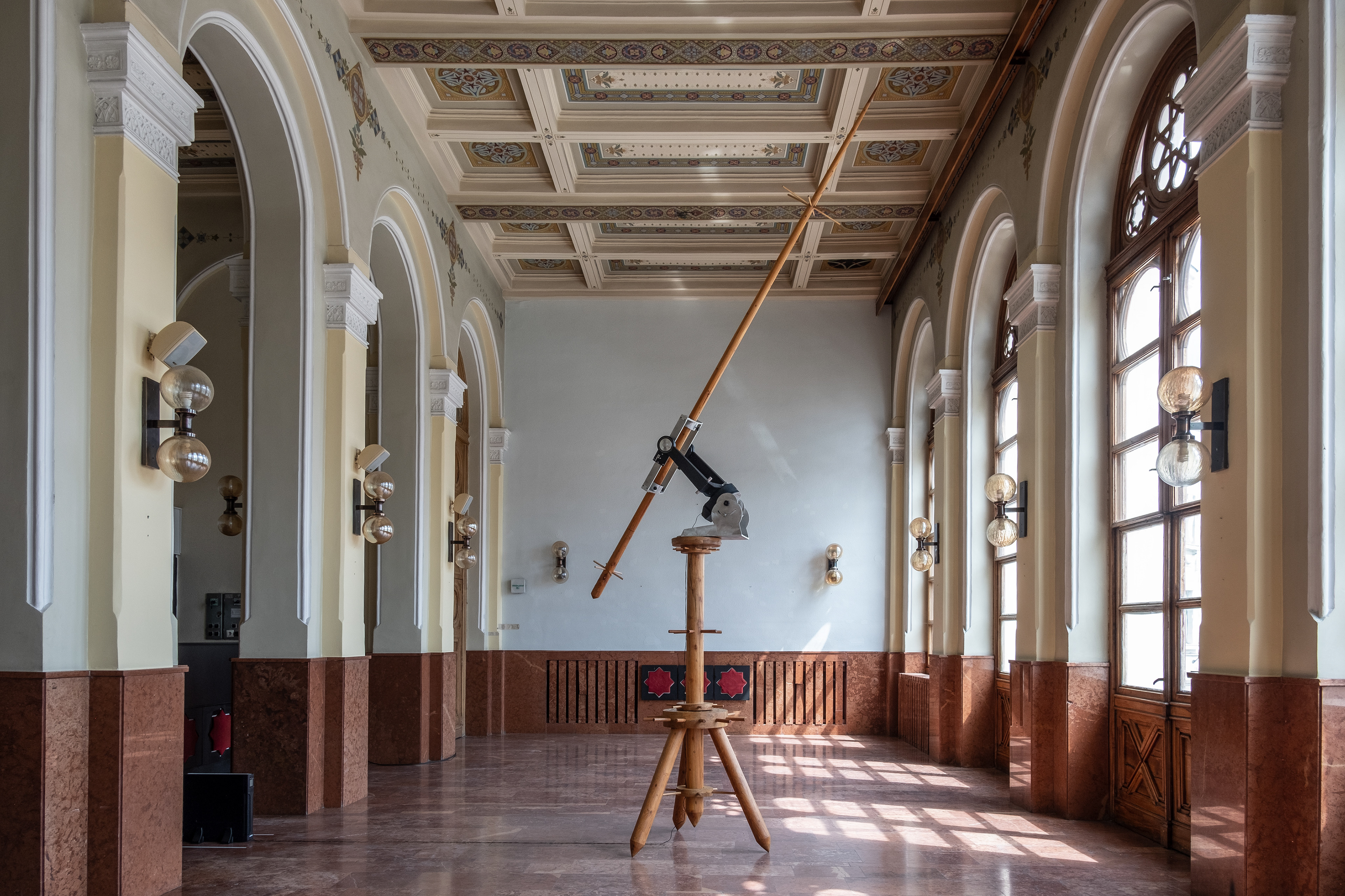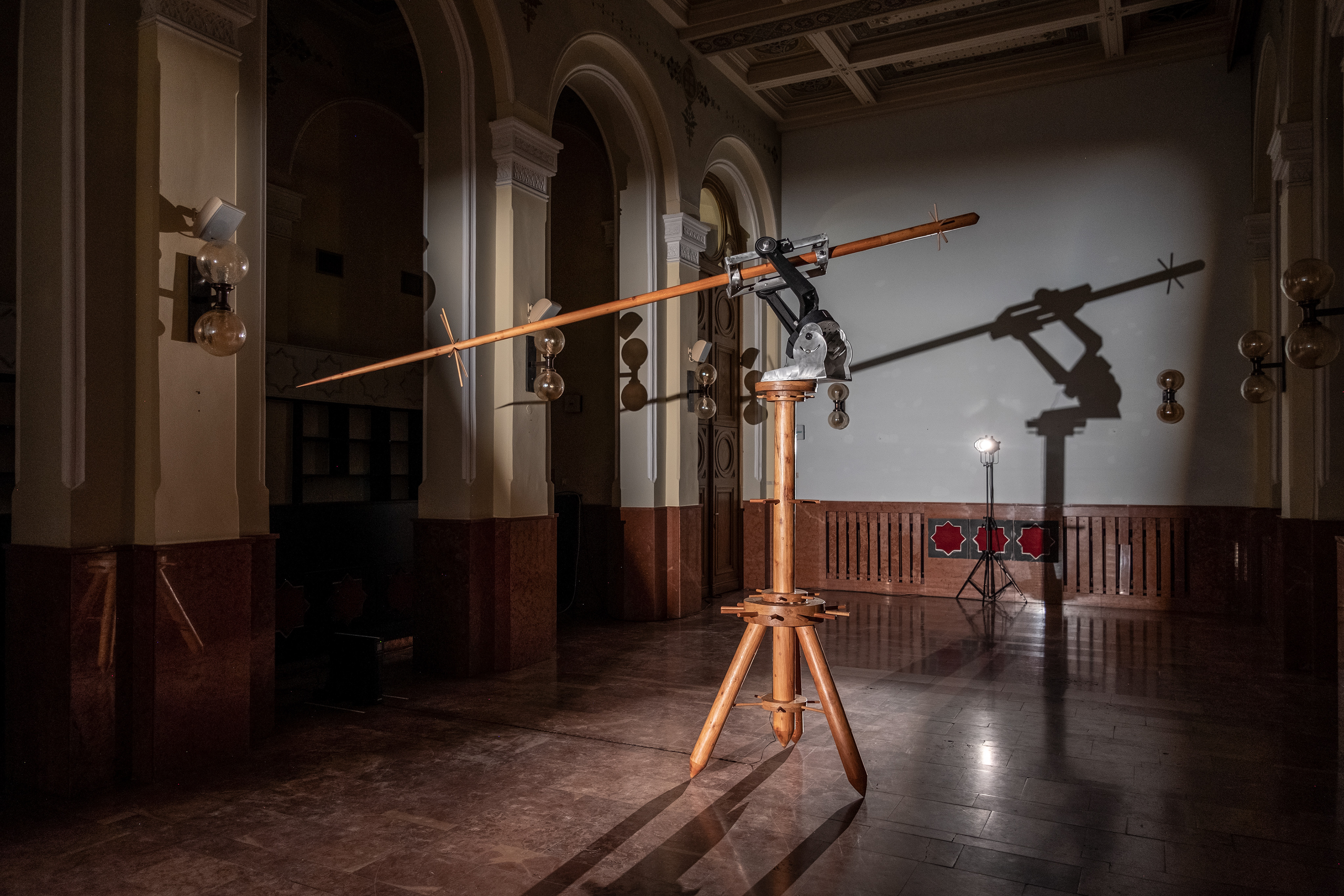
SunPin - site-specific kinetic sculpture
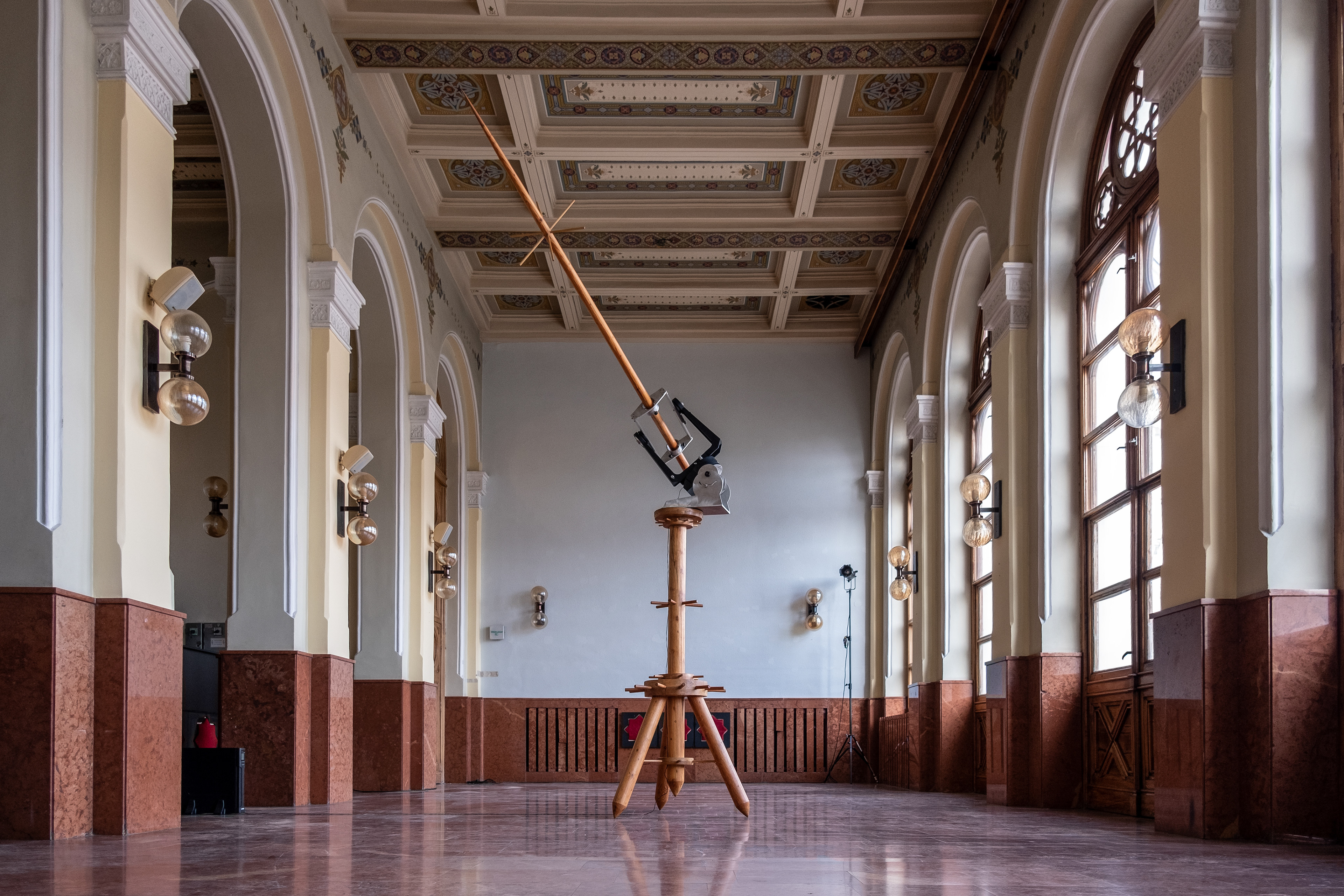
Lighthouse ON exhibition, Csokonai Theatre, Debrecen, Hungary, 2020
Exhibited at multiple venues since 2006.
Lighthouse ON exhibition, Csokonai Theatre, Debrecen, Hungary, 2020
Exhibited at multiple venues since 2006.
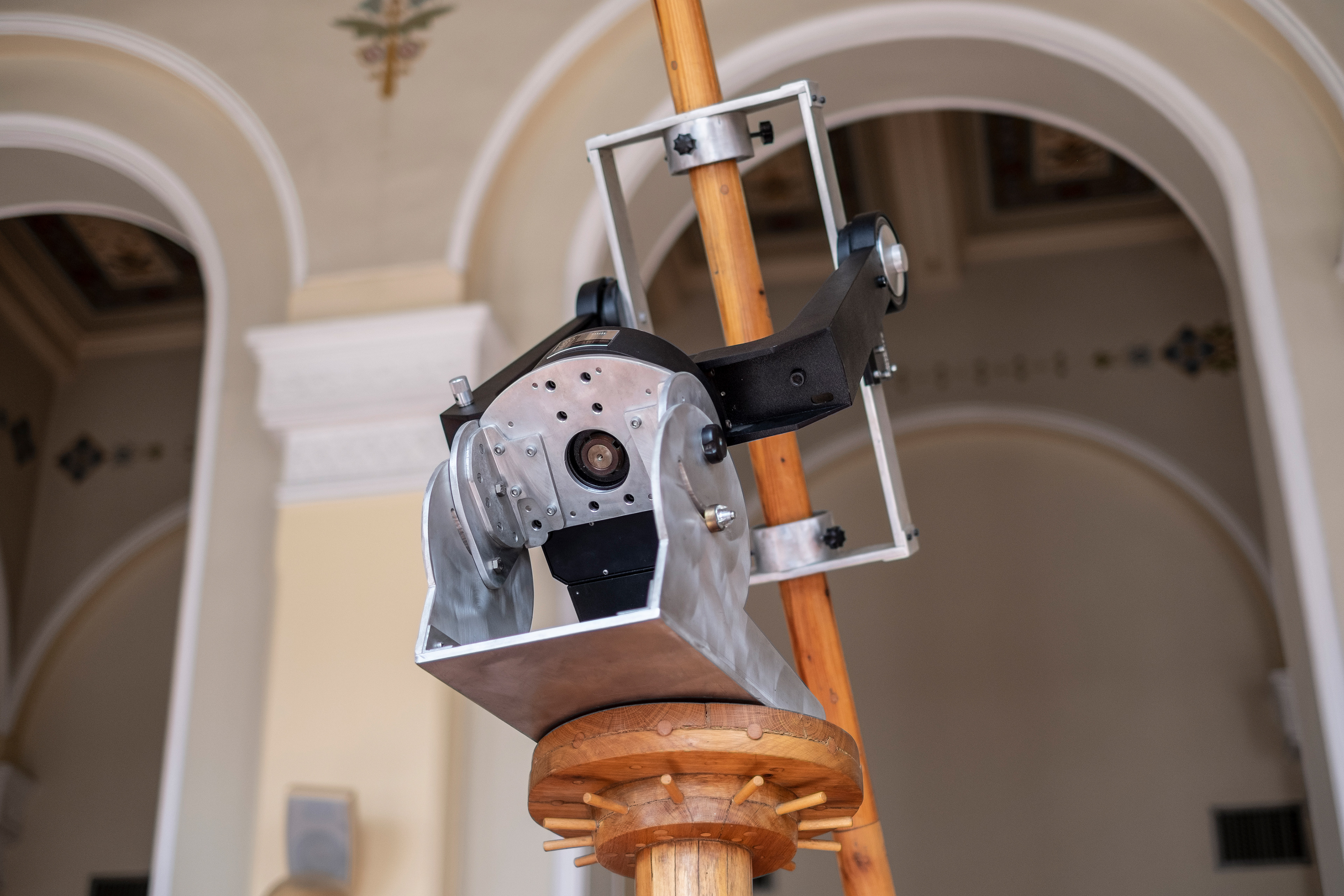
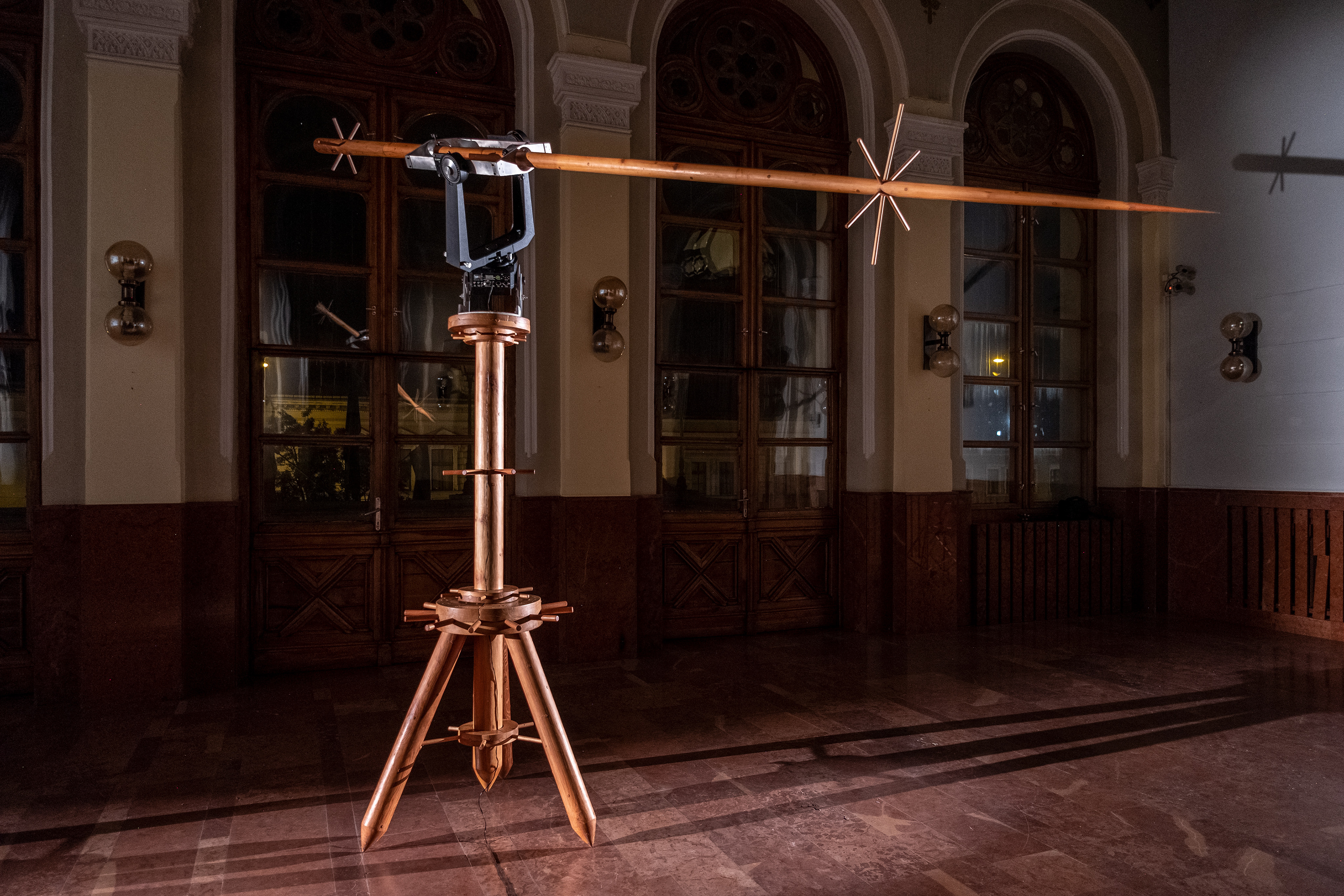
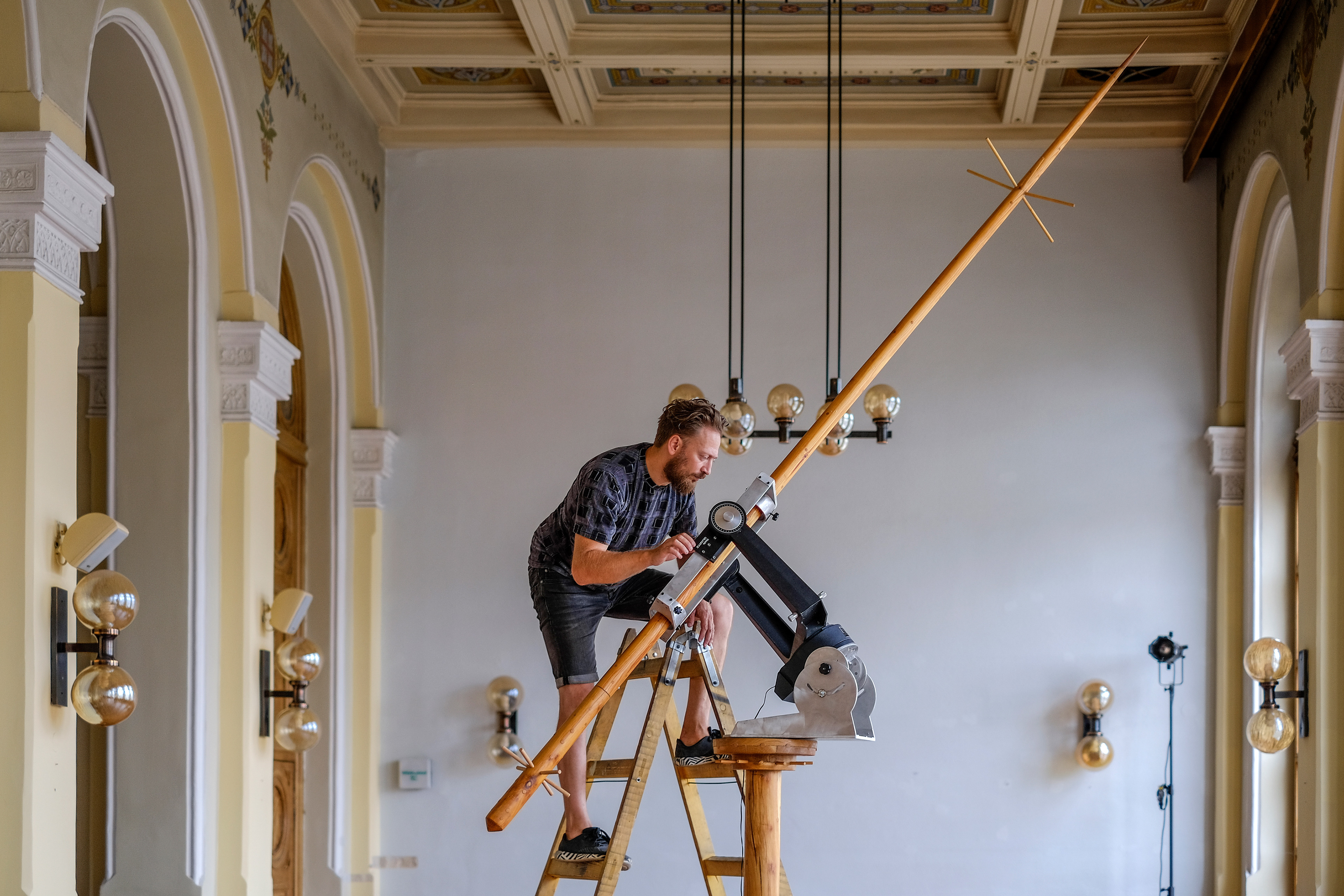
SunPin is a hybrid kinetic structure composed of both low- and high-tech elements. It combines wooden and aluminium components with modified astronomical electronics and mechanical systems, continuously tracking the Sun’s apparent movement, day and night.
The cyclical, recurring movement of the Sun and the Earth in relation to one another is a fundamental condition of life on Earth. SunPin operates as a mobile monument to this cosmic relationship: simultaneously a measuring instrument and a spatial marker. The structure fixes a specific location within a system of cosmic relations, designating the position of the “here and now.” In this sense, the machine functions as an extension of human attention. Since humans are unable to maintain focused observation of a single point for twenty-four hours, they construct a machine that performs this task on their behalf — a form of “delegated attention.”
For me, SunPin is not primarily about the Sun, but about alignment. It emerges in an era in which orientation is largely mediated through systems such as algorithms, networks, real-time data, and screens. In contrast, SunPin aligns itself with an external, non-human point of reference — one that cannot be manipulated, accelerated, or optimized. In this sense, SunPin functions as a counter-device: it does not produce information, but marks a position. It does not provide answers, but compels the viewer to relate — through their own body and spatial presence — to a process operating on a cosmic scale.
In a world where infrastructure can easily become fragile, SunPin stands at the threshold between archaic and technological knowledge, carrying the potential for orientation, planning, and survival.
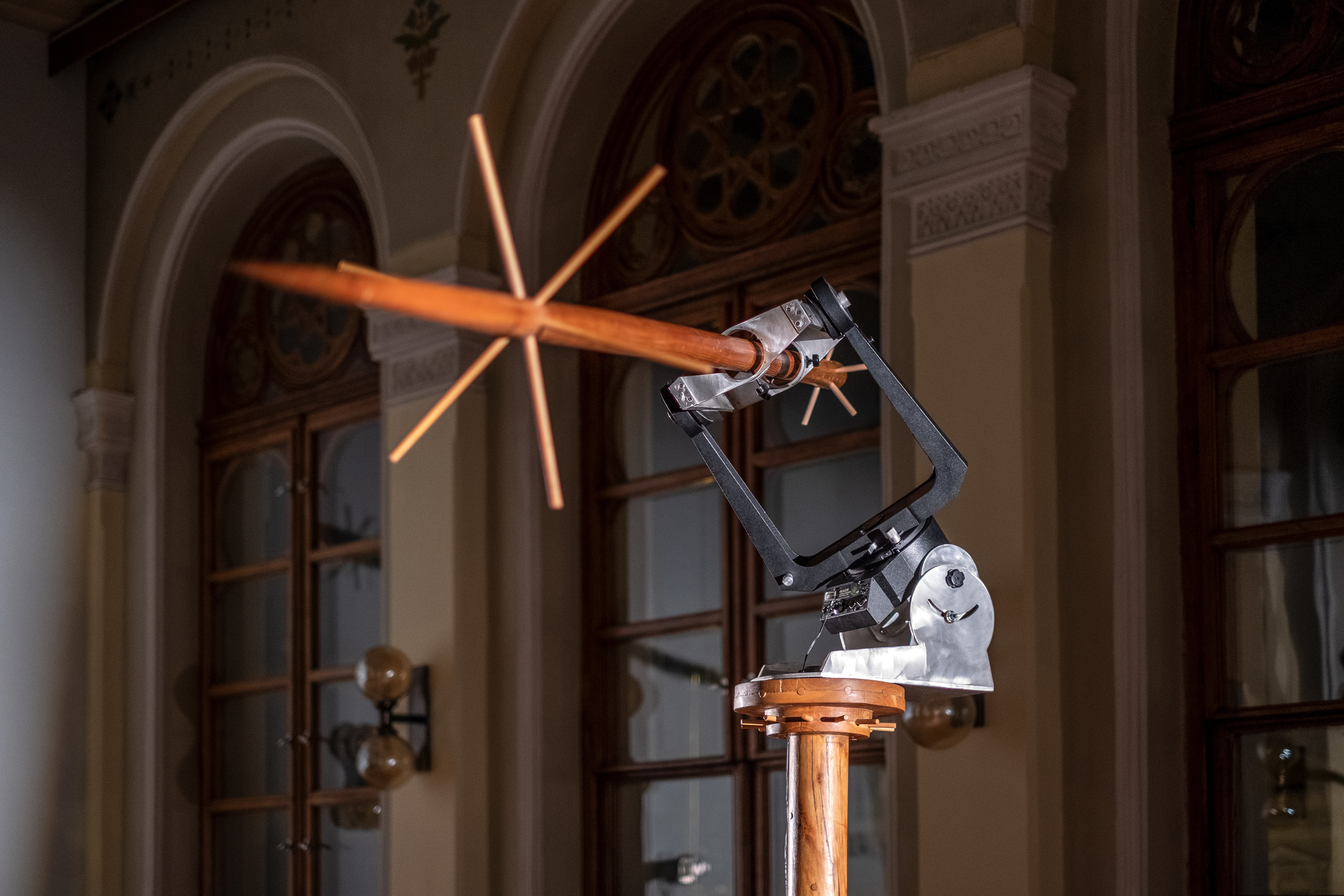
NapTű - helyspecifikus kinetikus szobor
Lighthouse ON kiállítás, Csokonai Színház, Debrecen, Magyarország, 2020
Több helyszínen bemutatva, 2016-tól.
Lighthouse ON kiállítás, Csokonai Színház, Debrecen, Magyarország, 2020
Több helyszínen bemutatva, 2016-tól.
A NapTű egy hibrid, low- és high-tech alkotóelemekből álló kinetikus szerkezet. Fa és alumínium elemek, átalakított csillagászati elektronika és mechanikus komponensek együttese, amely folyamatosan követi a Nap látszólagos mozgását, nappal és éjszaka egyaránt.
A Nap és a Föld egymáshoz viszonyított, ciklikusan ismétlődő mozgása a földi élet alapfeltétele. A NapTű e kozmikus viszony mobil emlékműveként működik: egyszerre mérőeszköz és térbeli jelölő. A szerkezet egy adott helyet rögzít a kozmikus összefüggések rendszerében, kijelölve az „itt és most” pozícióját. A gép az emberi figyelem „meghosszabbítása". Mivel az ember nem tud 24 órán át koncentráltan egy pontra figyelni, megépíti a gépet, amely „megbízott figyelőként" megteszi helyette.
A NapTű számomra nem elsősorban a Napról szól, hanem az igazodásról. Egy olyan korban jelenik meg, ahol az orientáció döntően közvetített rendszereken keresztül történik: algoritmusok, hálózatok, valós idejű adatok és képernyők alapján. A NapTű ezzel szemben egy külső, nem emberi referenciaponthoz igazodik, amely nem manipulálható, nem gyorsítható és nem optimalizálható. Ebben az értelemben a NapTű egy ellen-eszköz: nem információt termel, hanem helyzetet jelöl ki. Nem válaszokat ad, hanem rákényszerít arra, hogy az ember a saját testével, a térben elfoglalt helyzetével viszonyuljon egy kozmikus léptékű folyamathoz.
Egy olyan világban, ahol az infrastruktúra könnyen sérülékennyé válhat, a NapTű archaikus és technológiai tudás határán álló eszközként a tájékozódás, a tervezés és a túlélés lehetőségét hordozza.